Diabetes MOSAIC: Diabetes Management: Opportunities to Support Adaptation and Implementation in Chinese Communities
About Diabetes MOSAIC
Type 2 diabetes (T2D) is a chronic medical condition that affects 1 in 10 Canadians. Our research has found that the occurrence of diabetes is rapidly increasing by 8.3% per year among Chinese immigrants in Ontario. This increase is likely driven by changes in diet, environment, and physical activity following arrival in Canada.
People with T2D are required to self-manage their condition by taking prescribed medications, improving their diet, and doing physical activity. While effective education can improve T2D self-management, improve quality of life, and reduce hospitalizations, it is imperative that such education is provided in a culturally- and linguistically-appropriate manner. Therefore, our team focuses on projects to advance culturally-appropriate self-management education initiatives for Chinese people with T2D.
Current Projects:
- Diabetes MOSAIC Project 1: Dietary Educational Resources for Chinese Community Members Living with Type 2 Diabetes
Co-developing practical nutrition resource that reflect the food traditions, cooking practices and lived experience of Chinese Canadian communities.
Building Community-Informed Cookbooks Through Photovoice
We are working with Chinese adults living with Type 2 Diabetes (T2D) to co-design culturally relevant dietary resources. Through a Photovoice process, participants documented their everyday food environments, meals, cooking practices, and strategies for managing diabetes. These photographs and stories will help inform the development of two culturally tailored Chinese cookbooks featuring homestyle recipes and practical diabetes self-management tips.
What is Photovoice? Photovoice is a participatory research approach that invites participants to use photography and storytelling to document their lived experiences. Participants photographed meals, ingredients, gardens, food storage practices, and everyday decisions related to diabetes self-management.
Through these conversations, participants shared how they balance cultural food traditions, family practices, health information, and blood glucose management in their daily lives.
Project Progress: Preliminary Findings from PhotoVoice – Participant Photo Gallery
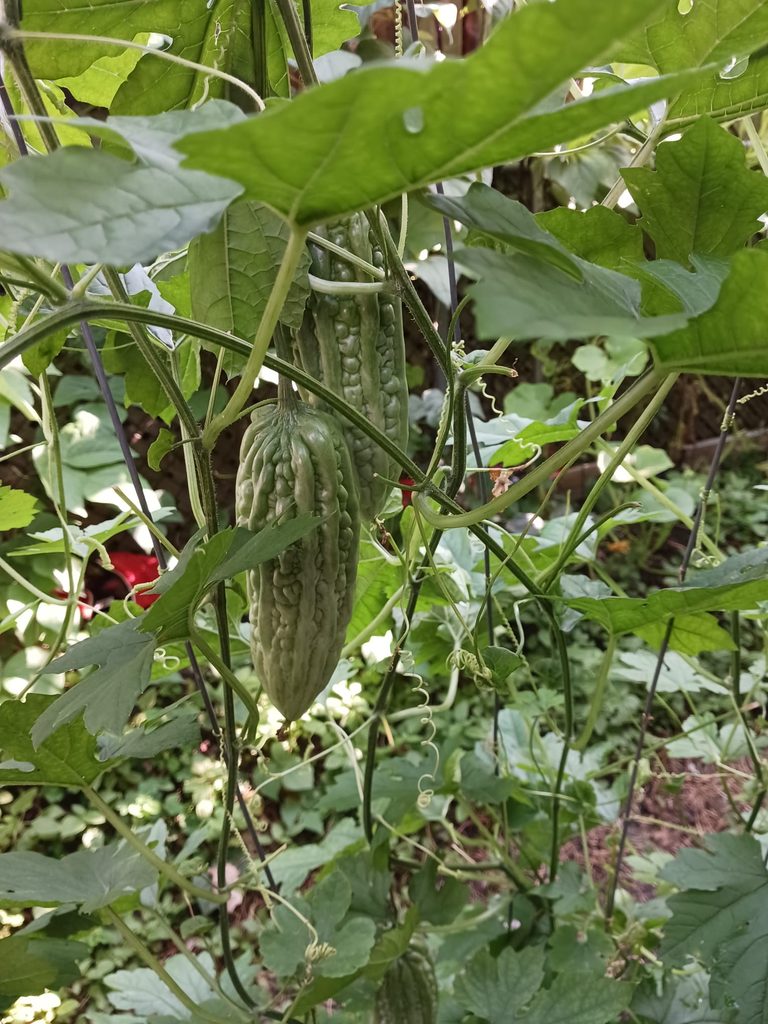
Photo 1: Home Garden
“People say pumpkin is good for diabetes, so we grow our own pumpkins.”
Linda and her husband grow pumpkins, bitter melon, hairy gourd, and other vegetables at home, connecting gardening, food preparation, and diabetes self-management.
- Diabetes MOSAIC Project 2: Peer support program for Chinese Community Members Living with Type 2 Diabetes
Peer support connects people living with the same condition so they can help one another. A collaboration with Dr. Yuexing Liu, Shanghai Jiao Tong University School of Medicine.
Building Community Through Peer Support.
We are developing a culturally tailored peer support program for Cantonese and Mandarin-speaking adults living with Type 2 Diabetes (T2D). The program will provide opportunities to connect with peers, share experiences, learn practical self-management strategies, and receive ongoing encouragement from others living with diabetes.
What is peer support? Peer support brings together people with shared lived experiences to provide practical, social, and emotional support. Research shows that peer support can help people improve diabetes self-management, build confidence, and feel more connected in their health journey.
Project Progress: Preparing for Launch – November 2026
Past Projects:
- Psychometric Validation of the Chinese Diabetes Education Questionnaire (DATE-Q-Chinese)
Measuring Diabetes Knowledge in Chinese-Speaking Communities
To know whether diabetes education is working, we need a questionnaire that people can understand and that reflects their language and culture. This study translated and adapted a 20-question diabetes knowledge questionnaire, the DATE-Q, into Chinese, with input from healthcare providers and Chinese adults living with type 2 diabetes. It was then tested with 103 Chinese-speaking adults in Toronto. The Chinese version was found to be reliable and to measure diabetes knowledge well. Higher scores were linked to higher health literacy and education, and participants scored lowest on self-management, pointing to an area where more education and support may help.
Publication
Xiao, J., Ghisi, G. L. de M., Cao, A., Cheung-Leung, P.-L., Poon, L., Yip, L., Chan, A., Belfer, T., Oh, P., Aultman, C., Huang, Y., Lee, G., Ke, C., & the Diabetes MOSAIC Investigators. (2026). Cultural adaptation, translation, and psychometric validation of the Chinese Diabetes Education Questionnaire (DATE-Q-Chinese). Canadian Journal of Diabetes.
Read the full publication here: Cultural Adaptation, Translation, and Psychometric Validation of the Chinese Diabetes Education Questionnaire (DATE-Q-Chinese) - Efficacy of the Chinese “Diabetes College” program
Supporting Chinese-Speaking Adults with Type 2 Diabetes Through Online Video Education
This study looked at whether Diabetes College, an online video education program, helps Chinese-speaking adults with type 2 diabetes in Toronto when it is offered in Cantonese and Mandarin. Eighty-four adults watched 12 short videos at home over 12 weeks, along with an educational fact sheet. Afterward, participants showed better knowledge in several areas, including diabetes self-management, long-term complications, physical activity, and emotional well-being. Fruit and vegetable intake and physical activity did not change, which suggests that additional supports may be needed to help people turn knowledge into everyday habits.
Publication
Xiao, J., Ghisi, G. L. de M., Cao, A., Cheung-Leung, P.-L., Poon, L., Yip, L., Chan, A., Belfer, T., Oh, P., Aultman, C., Huang, Y., Lee, G., Ke, C., & the Diabetes MOSAIC Investigators. (2026). Cultural adaptation, translation, and psychometric validation of the Chinese Diabetes Education Questionnaire (DATE-Q-Chinese). Canadian Journal of Diabetes.
Link: Manuscript under peer review.